
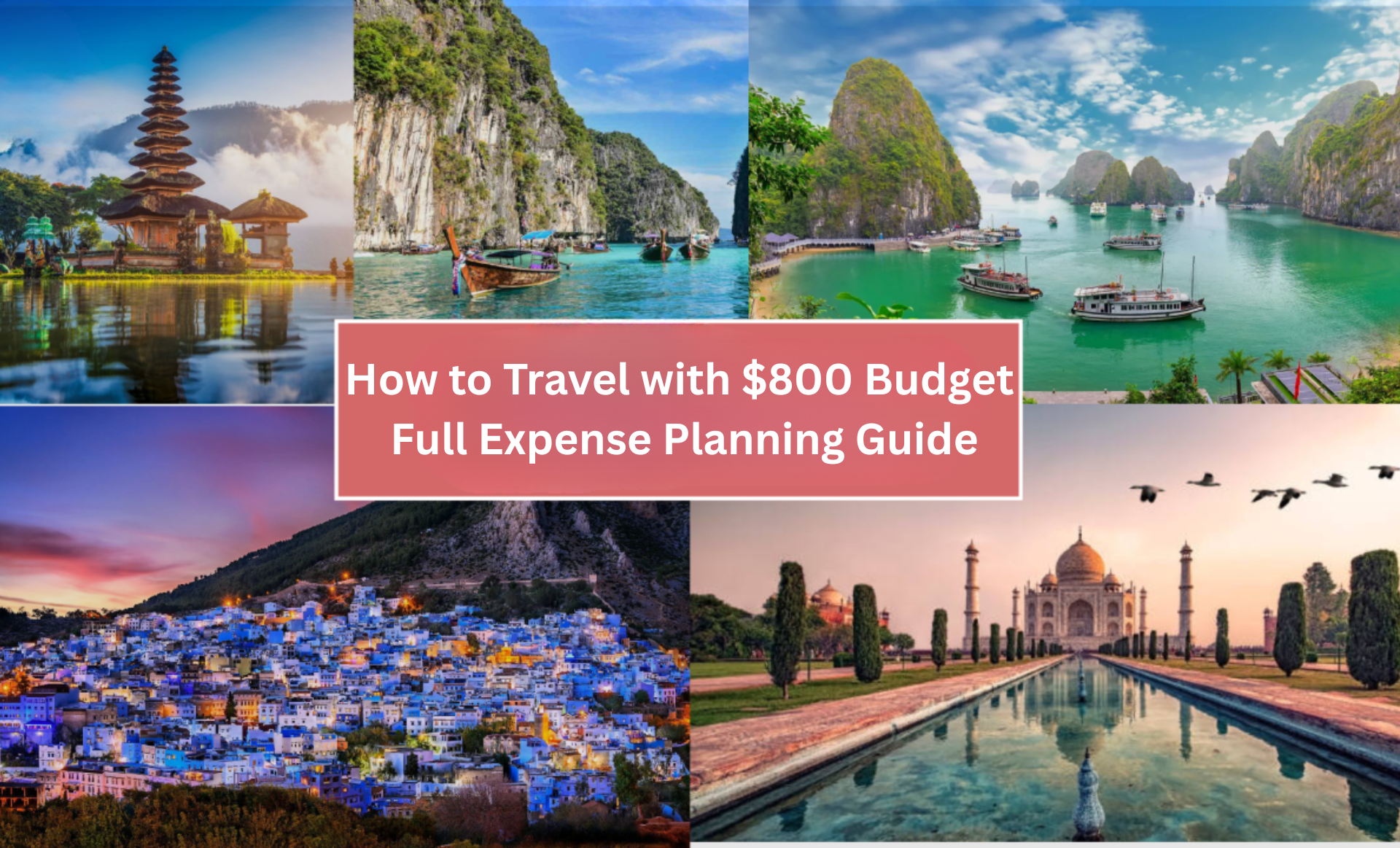
Traveling on a tight budget can be made achievable when a clear financial structure is followed. With only $800, a meaningful trip can still be experienced if costs are carefully controlled and smart planning strategies are applied. In this guide, a full expense plan will be presented so that every dollar is used efficiently. Moreover, practical methods will be explained so savings can be maximized without sacrificing enjoyment.
Budget Travel Planning Strategy
First, a realistic destination should be selected where affordability is supported by local prices. Regions where accommodation, food, and transportation are naturally cheaper should be prioritized. In addition, off-season travel periods should be chosen because lower demand is usually reflected in reduced costs.
A detailed budget should be created before departure. Expenses should be divided into categories such as transportation, lodging, food, activities, and emergency funds. By doing so, overspending can be prevented and financial control can be maintained throughout the trip. Furthermore, spending limits should be established for each category so adjustments can be made if necessary.
Affordable Transportation Tips
Transportation costs are often considered the largest expense; however, they can be significantly reduced when flexible planning is practiced. Budget airlines should be monitored regularly, and fare comparison tools should be utilized so the lowest price can be identified. Additionally, flights should be booked several weeks in advance because cheaper rates are typically offered earlier.
Public transportation should be used instead of private taxis whenever possible. City buses, trains, and shared transport options are widely available in most destinations. As a result, transportation expenses can be minimized while local culture is experienced more authentically. Moreover, walking routes should be explored since free mobility is provided and hidden attractions are often discovered.
Budget Accommodation Options
Accommodation expenses can easily consume a large portion of an $800 budget; therefore, affordable alternatives should be considered. Hostels, guesthouses, and budget hotels should be compared carefully before a reservation is made. In many cases, shared dormitories are offered at significantly lower rates, allowing substantial savings to be achieved.
Short-term rental platforms may also be explored because competitive prices are frequently listed by local hosts. Additionally, longer stays are often rewarded with discounts, which helps stretch the budget further. If safety and comfort are prioritized, accommodations with verified reviews should be selected so unpleasant surprises can be avoided.
Cheap Food and Daily Expenses
Food costs can be managed effectively when local dining habits are followed. Instead of tourist restaurants, street food vendors and local markets should be chosen because meals are typically offered at lower prices. In many destinations, fresh and authentic dishes can be enjoyed while spending less than expected.
Groceries should be purchased occasionally so simple meals can be prepared independently. Consequently, daily expenses can be reduced while flexibility is maintained. Furthermore, refillable water bottles should be carried because unnecessary purchases of bottled drinks can be prevented.
Free and Low-Cost Activities
Entertainment and sightseeing do not always require high spending. Many destinations offer free attractions such as public parks, cultural neighborhoods, historical streets, and scenic viewpoints. Therefore, research should be conducted in advance so complimentary experiences can be identified.
Discount passes for museums and local attractions should also be considered because bundled pricing is frequently provided. Additionally, free walking tours are offered in many cities, and valuable insights are usually shared by local guides. As a result, cultural knowledge can be gained without exceeding the budget.
Emergency Fund and Smart Money Management
An emergency reserve should always be included in the travel budget. At least 10% of the total amount should be reserved for unexpected expenses such as medical needs or transportation changes. By maintaining a safety buffer, financial stress can be reduced and confidence can be preserved throughout the journey.
Daily spending should be tracked consistently. Mobile budgeting apps or simple expense lists can be used so financial awareness is maintained. If overspending is detected, adjustments should be implemented immediately to prevent budget exhaustion.
Travel Smart with an $800 Budget
Traveling with an $800 budget can be successfully accomplished when strategic decisions are made and disciplined spending is practiced. By selecting affordable destinations, using budget transportation, choosing economical accommodations, and prioritizing free activities, a fulfilling travel experience can be achieved without financial strain. Ultimately, careful planning should be embraced because memorable journeys are not defined by money alone but by thoughtful choices and meaningful experiences.